
Best vr workout games for weight loss are the ones that keep your heart rate up long enough to matter, while being fun enough that you actually come back tomorrow. If you’ve tried “getting into cardio” and it never sticks, VR can change the math because it sneaks consistency into your week.
That said, not every “fitness” title burns energy the same way, and a great game for one person can be a bad fit for another, especially if you deal with knee pain, motion sensitivity, or you just hate anything that feels like a bootcamp.
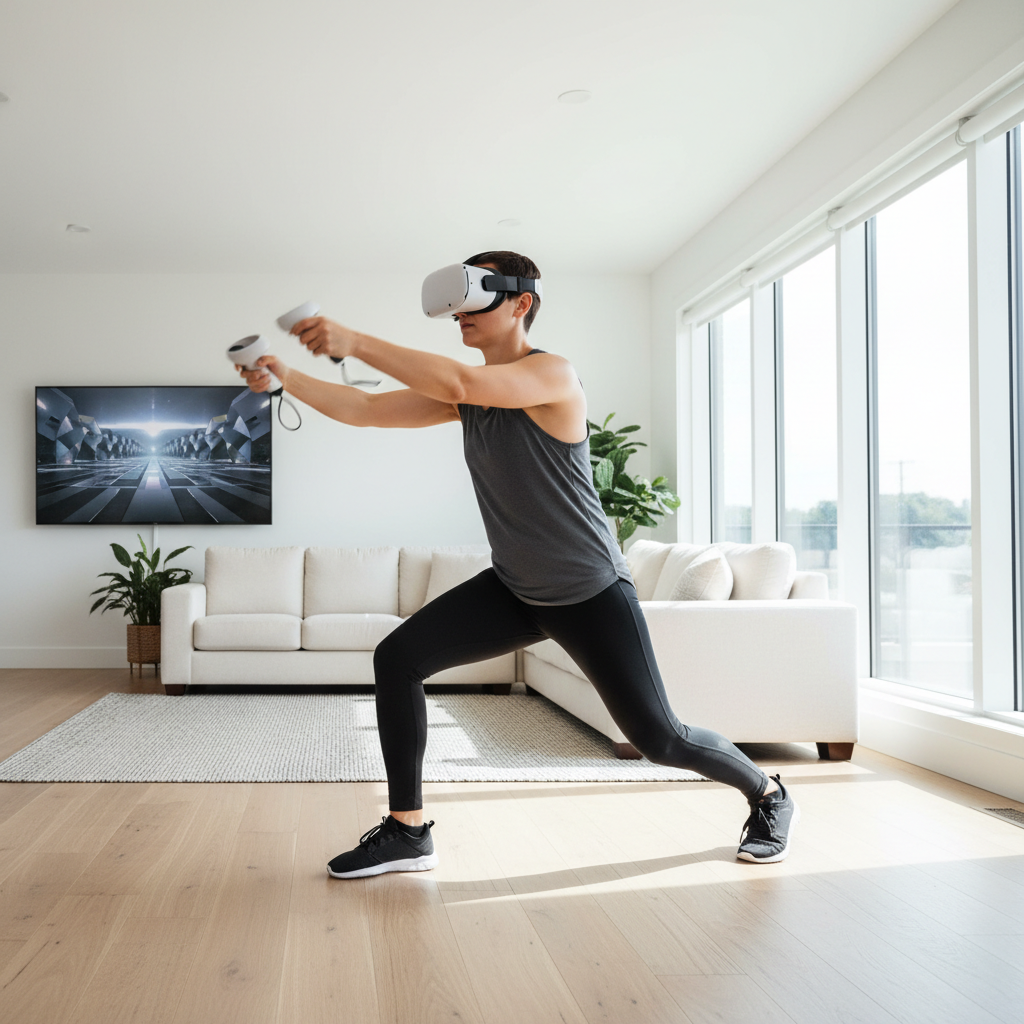
This guide narrows the field to VR workout games that typically work well for fat loss goals, shows how to choose by intensity and comfort, and gives a practical plan you can follow without guessing.
What actually makes a VR game good for weight loss?
Weight loss still comes down to sustained activity plus a manageable calorie deficit, but VR influences the part most people struggle with: adherence. A game is “good” when it reliably gets you moving at a moderate-to-vigorous intensity, and you can repeat it 3–5 times per week without dreading it.
Look for these traits when you’re scanning the store page or reviews:
- Continuous movement with minimal downtime between rounds or songs
- Scalable difficulty so you can progress without injury-risk jumps
- Full-body demand (legs + core + upper body), not just wrist flicks
- Session structure that supports 20–45 minute blocks
- Low friction: quick boot-up, clear menus, few “walk to the next thing” moments
According to the Centers for Disease Control and Prevention (CDC), adults generally benefit from regular moderate or vigorous aerobic activity across the week, and VR workouts can count if your effort level reaches that zone.
Quick comparison: best VR workout games (by style and intensity)
If you just want a short list, start here. Intensity varies by fitness level and settings, so treat “High” as “often gets people breathing hard” rather than a promise.
| Game | Workout feel | Typical intensity | Best for | Watch-outs |
|---|---|---|---|---|
| Supernatural | Coached cardio + boxing | Med–High | People who like guided classes | Subscription cost, needs room to swing |
| Les Mills Bodycombat | Structured boxing workouts | High | HIIT-style sessions | Can be tough on shoulders if form slips |
| Beat Saber | Rhythm slashes | Low–Med (up to High on harder maps) | Beginners, consistency | Easy to “cheat” with small arm moves |
| Pistol Whip | Rhythm shooter + squats | Med–High | Leg burn + cardio without feeling like “exercise” | Lots of bending, not ideal for knee flare-ups |
| Thrill of the Fight | Boxing simulator | High | Max sweat, short brutal sessions | Form matters, can overdo intensity fast |
| FitXR | Boxing/dance fitness classes | Med–High | Variety, class vibe | Some content behind subscription |
The “best vr workout games for weight loss” usually come from the boxing and coached-cardio category because they reduce downtime and push full-body effort. Rhythm games can still work, but you may need to choose harder modes and commit to bigger movements.
Top picks (with real-world fit notes)
Supernatural (coached cardio that feels like class)
Supernatural is popular because it removes decision fatigue: pick a workout, follow the coach, finish sweaty. Many people stay consistent with it because it feels like a guided session rather than a game you have to self-direct.
- Why it helps for fat loss: predictable session lengths, steady pacing, frequent full-body patterns
- Who it fits: anyone who likes Peloton-style instruction, playlists, and a “press play” routine
Les Mills Bodycombat (no-nonsense intensity)
If you want structure with fewer gimmicks, this one delivers. You’ll punch, squat, and move through combinations that can push you into vigorous effort quickly.
- Why it helps: clear progression, high work rate, minimal waiting around
- Good to know: if your shoulders get cranky, start shorter and keep punches controlled
Thrill of the Fight (the “I can’t believe I’m this tired” option)
This is closer to a boxing sim than a fitness app, which is exactly why it works for a lot of people. It’s easy to underestimate it, then realize you need a towel.
- Why it helps: high intensity, constant movement, naturally interval-like rounds
- Watch-out: going all-out daily can backfire if recovery and joints can’t keep up
Beat Saber (best for consistency, not “max burn” by default)
Beat Saber can be a legit workout if you play it like one. The mistake is tiny wrist cuts on easy mode, which barely raises your heart rate.
- Make it count: pick higher difficulty, use full arm swings, add squats or side steps on patterns
- Who it fits: beginners who need “fun first” to build a habit
Pistol Whip (cardio + legs in disguise)
Pistol Whip tends to spike effort because you duck, squat, and move with urgency. It’s one of the better “game-first” titles that still leaves you breathless.
- Why it helps: lower-body demand, natural intervals, surprisingly high sweat factor
- Adjustments: reduce squat depth if knees complain, and build volume gradually
Self-check: which type of VR workout will you actually stick to?
Before you buy three games and abandon them, do a quick reality check. Pick the statements that sound like you on a normal weekday.
- “I want someone to tell me what to do.” → coached fitness apps (Supernatural, FitXR, Les Mills)
- “I get bored fast, I need gameplay.” → rhythm/action (Beat Saber, Pistol Whip)
- “I want the hardest thing, quickly.” → boxing sim (Thrill of the Fight)
- “My knees or back act up sometimes.” → prioritize low-impact options, limit deep squats, consider more boxing/upper-body focus
- “I get motion sick.” → avoid artificial locomotion, choose stationary titles and comfort settings
One more honest question: do you have space to move safely? Most people need a clear play area, stable footing, and no low furniture within arm range. That matters as much as the game choice.
How to turn VR gaming into a weight-loss routine (without burning out)
The games are the fun part, but the routine is what moves the scale. According to the American Heart Association (AHA), adults often aim for regular aerobic activity each week, and mixing moderate and vigorous sessions can support overall health. If you’re new to exercise, it may be smart to ramp up gradually and check with a clinician if you have medical concerns.
A simple 4-day weekly template
- Day 1 (Vigorous): 20–30 min boxing-focused session (Les Mills or Thrill of the Fight)
- Day 2 (Moderate): 25–40 min rhythm/cardio flow (Supernatural or Beat Saber on challenging mode)
- Day 3 (Rest or walk): easy movement, mobility, light stretching
- Day 4 (Intervals): 10 min warm-up + 12–18 min intervals + 5 min cool-down (Pistol Whip or boxing rounds)
Intensity cues that work in real life
- Moderate: breathing heavier but you can speak short sentences
- Vigorous: you can only get a few words out at a time
If your sessions are “fun” but never reach moderate effort, you may still get benefits, but weight loss progress often slows. This is where difficulty settings, larger movement, and fewer pauses matter.
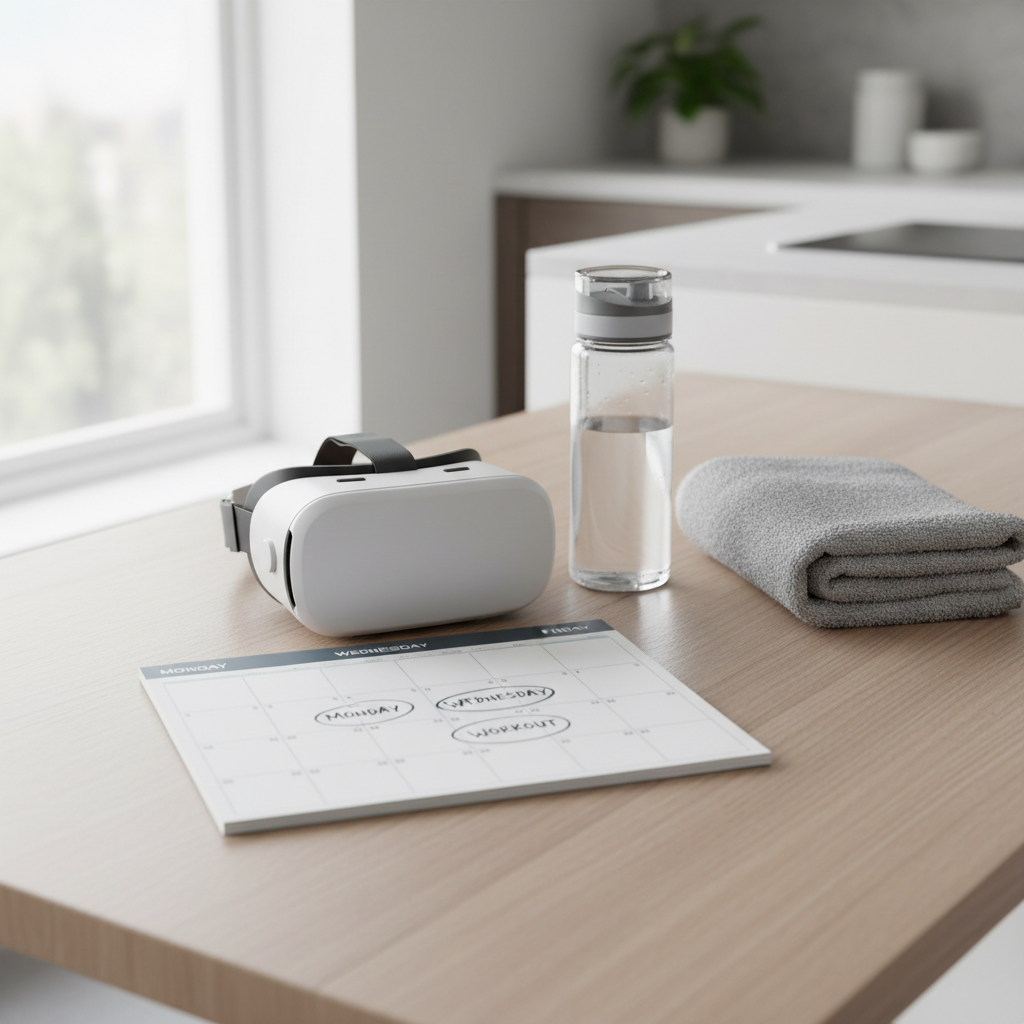
Key takeaways: choose one “sweat game,” one “habit game,” schedule four sessions, then adjust volume before you switch titles. Novelty helps, but structure helps more.
Practical setup tips that prevent injuries (and broken controllers)
VR workouts feel low-risk until you punch a wall or twist awkwardly. A few setup habits reduce common problems.
- Clear a real boundary: make your guardian/space slightly smaller than the actual room so you get warned early
- Grip and straps: use controller straps, consider grips if hands get sweaty
- Footwear: many people do fine barefoot on a yoga mat, others need trainers for support, choose what keeps you stable
- Warm-up: 3–5 minutes of easy movement before high punches or deep squats
- Form over rage: wild hooks and flailing burn energy but can irritate shoulders and elbows
According to the U.S. Consumer Product Safety Commission (CPSC), preventing home injuries often comes down to basic environment control and safe use habits, which maps well to VR play spaces.
Common mistakes that make VR “not work” for weight loss
- Only playing on easy mode and assuming time-in-headset equals training effect
- Ignoring recovery, then quitting because wrists, shoulders, or knees feel beat up
- Overestimating calories burned and eating back “VR exercise” too aggressively
- Choosing motion-heavy games when you’re prone to nausea, then avoiding VR entirely
- Random workouts with no weekly plan, so intensity never progresses
If your goal is fat loss, tracking something simple helps: weekly session count, average session length, and perceived effort. You don’t need perfection, you need trendlines.
When to ask a professional (and what to ask)
If you have heart conditions, uncontrolled blood pressure, frequent dizziness, recent injuries, or joint pain that spikes with punching or squatting, talk with a clinician or a physical therapist before pushing intensity. Many cases are manageable, but a small tweak in movement pattern can prevent weeks of setback.
Useful questions to bring:
- “Which movements should I limit right now, and what can I swap in?”
- “What effort level is appropriate for me for 20–30 minutes?”
- “Any warning signs that mean stop immediately?”
Conclusion: picking the right game matters, but the schedule matters more
The best vr workout games for weight loss are the ones you can repeat, progress, and recover from. If you want the simplest path, pick one coached option for structure and one game-first option for fun, then run a four-day weekly plan for a month before you judge results.
If you want a small action step today, set up your play space, choose a 25-minute session you can finish, and put the next three workouts on your calendar, future-you usually thanks you for that.
FAQ
- What are the best VR workout games for weight loss if I’m a beginner?
Beat Saber and coached apps with beginner programs often feel more approachable. The real win is picking a difficulty that raises your breathing without wrecking you the next day. - Is boxing in VR safe for my shoulders?
It can be, but many people overextend or throw punches too hard without control. Start with shorter sessions, keep elbows slightly bent, and consider advice from a trainer or clinician if you have prior issues. - How long should a VR workout be to support fat loss?
Many people do well with 20–45 minutes depending on intensity. Consistency across the week usually matters more than pushing one marathon session. - Can I lose weight with Beat Saber alone?
Possibly, especially if you play higher-intensity maps and keep movement big, but it’s easy to plateau. Pairing it with a more demanding boxing or coached session often improves results. - Do VR workouts count as “real cardio”?
If your effort reaches a moderate or vigorous level, it can count as aerobic activity. Use talk-test intensity cues instead of guessing. - What if VR makes me nauseous?
Choose stationary games, use comfort settings, and stop before you push through nausea. Many people adapt over time, but if symptoms persist, it’s reasonable to switch titles or consult a professional. - What equipment helps most for VR fitness?
Controller straps, a sweat-resistant face cover, and a stable mat help a lot. A fan nearby also makes longer sessions more tolerable.
If you’re trying to build a weight-loss habit and you’d rather not guess which titles match your space, joints, and motivation style, a simple shortlist and a repeatable weekly plan usually gets you farther than buying every new release.