
Best games with treasure hunting and maps usually scratch a very specific itch: you want the thrill of discovery, but you also want the hunt to feel earned, not like you’re vacuuming a giant open world for icons.
The tricky part is that “treasure hunting” means different things in different games. Sometimes it’s literal map-reading with landmarks and riddles, sometimes it’s deciphering journals, and sometimes it’s a layered loot chase that only feels like treasure hunting because the world design supports it.
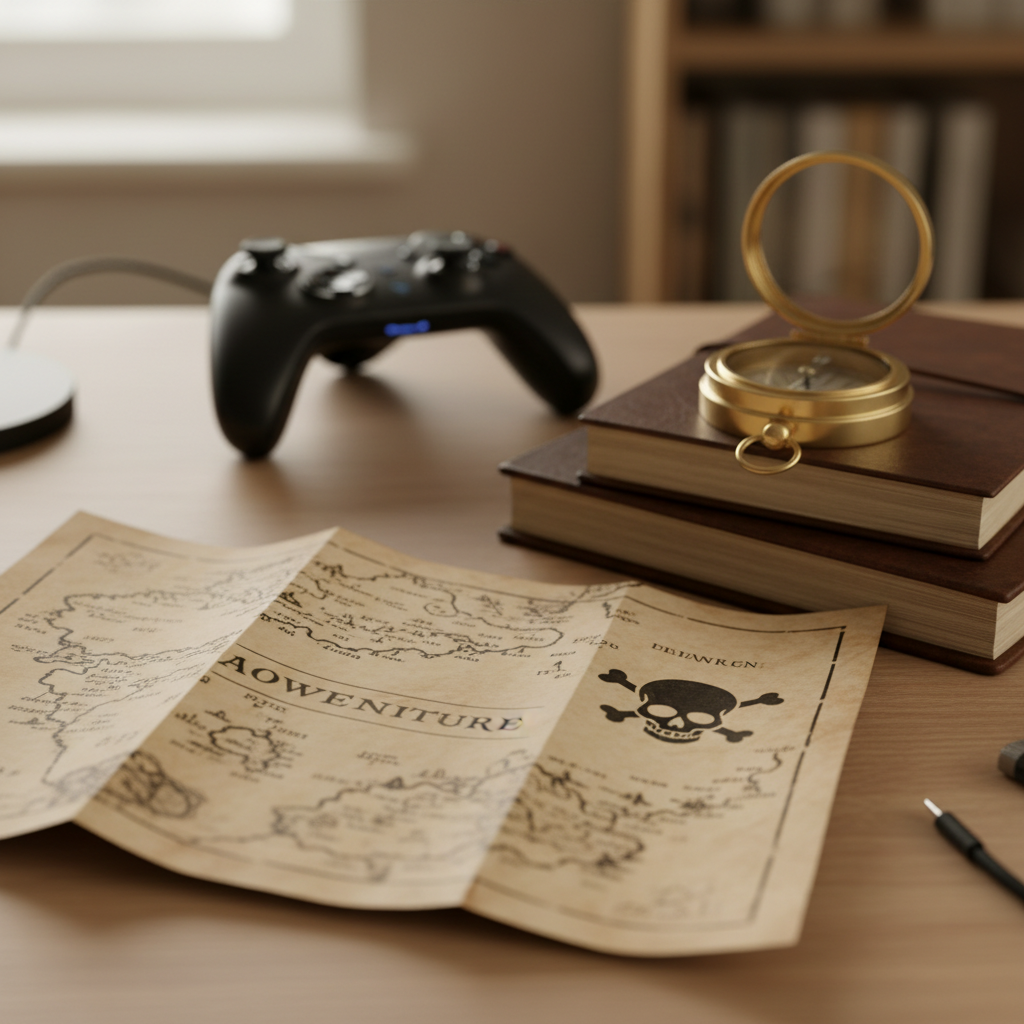
This guide focuses on games where maps, clues, and exploration actually matter. You’ll get a practical shortlist, a quick comparison table, and a few setup tips so the “hunt” feels satisfying again.
What “treasure hunting with maps” really looks like in games
When people search for best games with treasure hunting and maps, they’re often asking for a certain loop: find a clue, interpret it, travel, then confirm you’re in the right spot by reading the environment.
In practice, you’ll see a few common designs:
- Landmark-driven maps: you line up rocks, ruins, coastlines, or skylines and triangulate a location.
- Riddle or journal clues: a map exists, but the real “key” is text, symbols, or a puzzle trail.
- Navigation friction: limited markers, partial maps, fog-of-war, or diegetic maps that force you to pay attention.
- Risk/reward retrieval: the treasure exists, but reaching it requires combat, stealth, survival systems, or tool progression.
One quick reality check: if a game floods your screen with objective arrows, it can still be fun, but it rarely feels like an actual treasure hunt.
Quick comparison: standout treasure-hunting games (maps included)
If you want a fast pick, this table is the cleanest way to match your mood to a game’s “hunt style.” Availability can vary by platform and region.
| Game | Treasure-hunt feel | Map style | Best for |
|---|---|---|---|
| Sea of Thieves | High, social | Map fragments, X-marks, riddles | Co-op crews, emergent stories |
| Uncharted 4 | Cinematic, clue-led | Notes, symbols, environmental cues | Story-first treasure fantasy |
| Tomb Raider (2013) / Rise / Shadow | Puzzle tombs + exploration | Region maps, optional challenge tombs | Action + “mini dungeons” |
| The Legend of Zelda: Tears of the Kingdom | Sandbox discovery | Layered world maps, landmark navigation | Curious explorers, experimentation |
| Red Dead Redemption 2 | Slow-burn, clue chains | Hand-drawn style map, notes | Immersion and long hunts |
| Outer Wilds | Knowledge-as-treasure | Ship log “map” of clues | Mystery lovers who hate handholding |
| Assassin’s Creed Odyssey (select hunts) | Moderate, icon-adjacent | Clue prompts + world map | Big worlds with guided hunts |
The best games with treasure hunting and maps (editor picks)
Below are picks where the “map and clue” layer actually contributes to the fun, not just to padding completion time.
Sea of Thieves
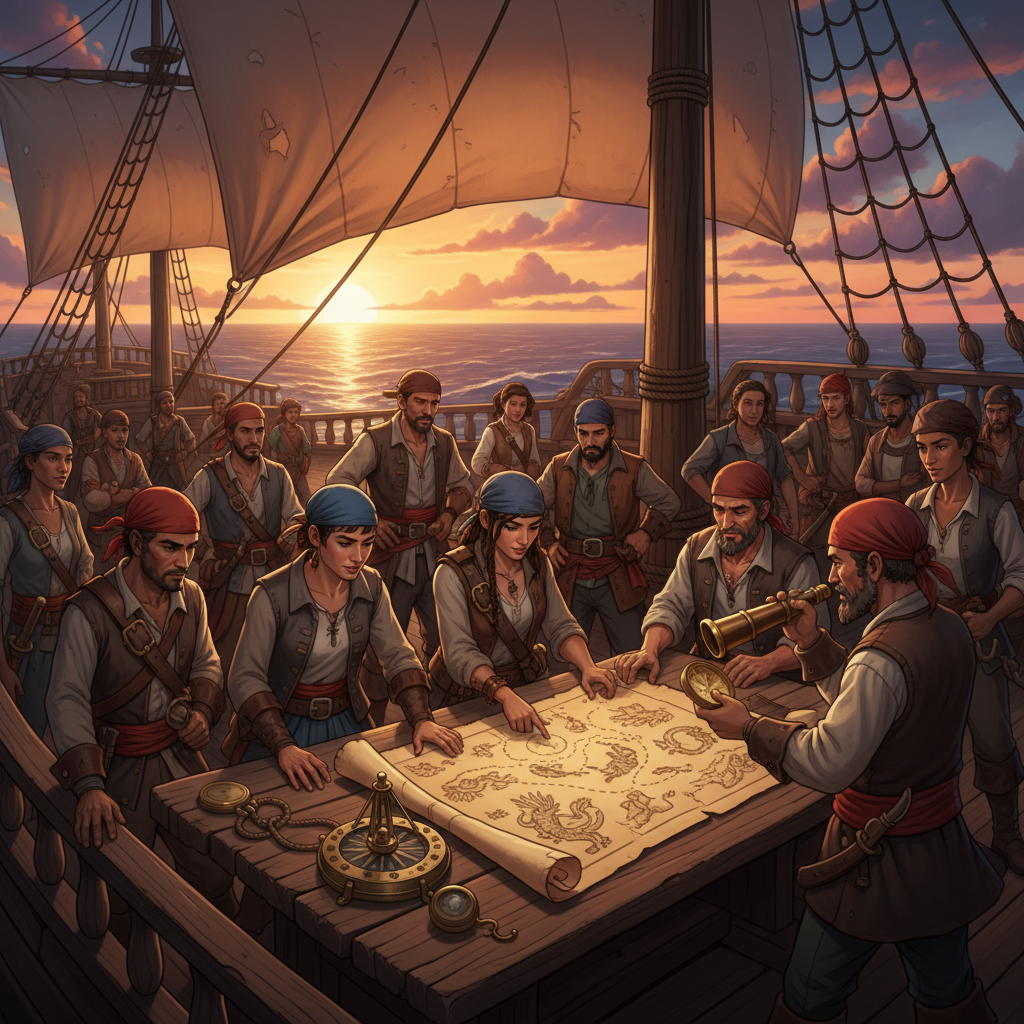
Sea of Thieves is basically a treasure-hunt generator. You take a voyage, get a map or riddle, navigate by islands and bearings, then dig, fight, or negotiate your way out.
Why it works: other players introduce uncertainty, so even a simple X-mark map becomes a small heist. If you want a relaxed hunt, you may prefer quieter servers or safer routes, because PvP can interrupt the “cozy map reading” vibe.
Uncharted 4: A Thief’s End
Uncharted 4 leans into the fantasy of decoding pirate lore and following historical breadcrumbs. You’re not free-roaming the way you are in a sandbox game, but the treasure-chase pacing feels great.
Why it works: puzzles are readable, the game gives you just enough friction to feel clever, and the maps and symbols feel “in-world,” not like a UI checklist.
Tomb Raider (Survivor trilogy)
The modern Tomb Raider games mix combat exploration with optional tombs that feel like compact treasure hunts: find the entrance, solve traversal/puzzle layers, then grab the reward.
What to know: the region map and objectives can get “gamey.” If you want the treasure-hunting vibe, prioritize challenge tombs, crypts, and document trails over pure collectible sweeps.
The Legend of Zelda: Tears of the Kingdom
This is treasure hunting in the broadest sense: rumors, strange landmarks, and “what’s over there?” curiosity. The map supports the loop, but you’ll also rely on visual navigation and experimentation.
Why it works: rewards often feel like discoveries, not just loot. If you enjoy drawing your own conclusions from odd geography, this belongs on your shortlist.
Red Dead Redemption 2 (treasure maps + exploration)
RDR2’s treasure hunts are slower and more grounded. You’ll follow multi-step treasure map chains, interpret drawings, then confirm locations by terrain and landmarks.
Why it works: the world has enough texture that “reading the land” is fun. It’s ideal if you want a calm, methodical hunt rather than constant puzzle rooms.
Outer Wilds
Outer Wilds is not about gold, it’s about knowledge. The “treasure” is understanding a mystery, and your map is effectively your ship log connecting clues across locations.
Important caveat: if you want literal map fragments and chests, this may not match your expectation. If you love detective work and self-directed exploration, it’s hard to beat.
A quick self-check: which treasure-hunt style fits you?
Before you buy or download, it helps to be honest about what you actually enjoy. Many people say they want treasure maps, but what they really want is a steady stream of rewards.
- I want real map reading (landmarks, directions, “where am I?”): try Sea of Thieves, RDR2 hunts.
- I want puzzles and set pieces (temples, tombs, mechanisms): Tomb Raider, Uncharted.
- I want pure discovery (rumors, weird geography, self-made routes): Tears of the Kingdom.
- I want mystery solving (connect clues, feel smart, minimal guidance): Outer Wilds.
- I get tired of wandering: prioritize games with shorter hunts and clearer clue chains, or use in-game notes/logs heavily.
If your answer is “I just want loot,” you still can enjoy these, but you’ll likely prefer titles that layer treasure hunts on top of a clear quest structure.
How to make treasure hunting feel better (practical setup tips)
You can squeeze more fun out of best games with treasure hunting and maps by adjusting how you play, not just what you play.
Tune the HUD instead of brute-forcing it
- Reduce map markers if the game allows it, keep only critical navigation.
- Turn off objective lines/arrows for a session, then re-enable if you get stuck.
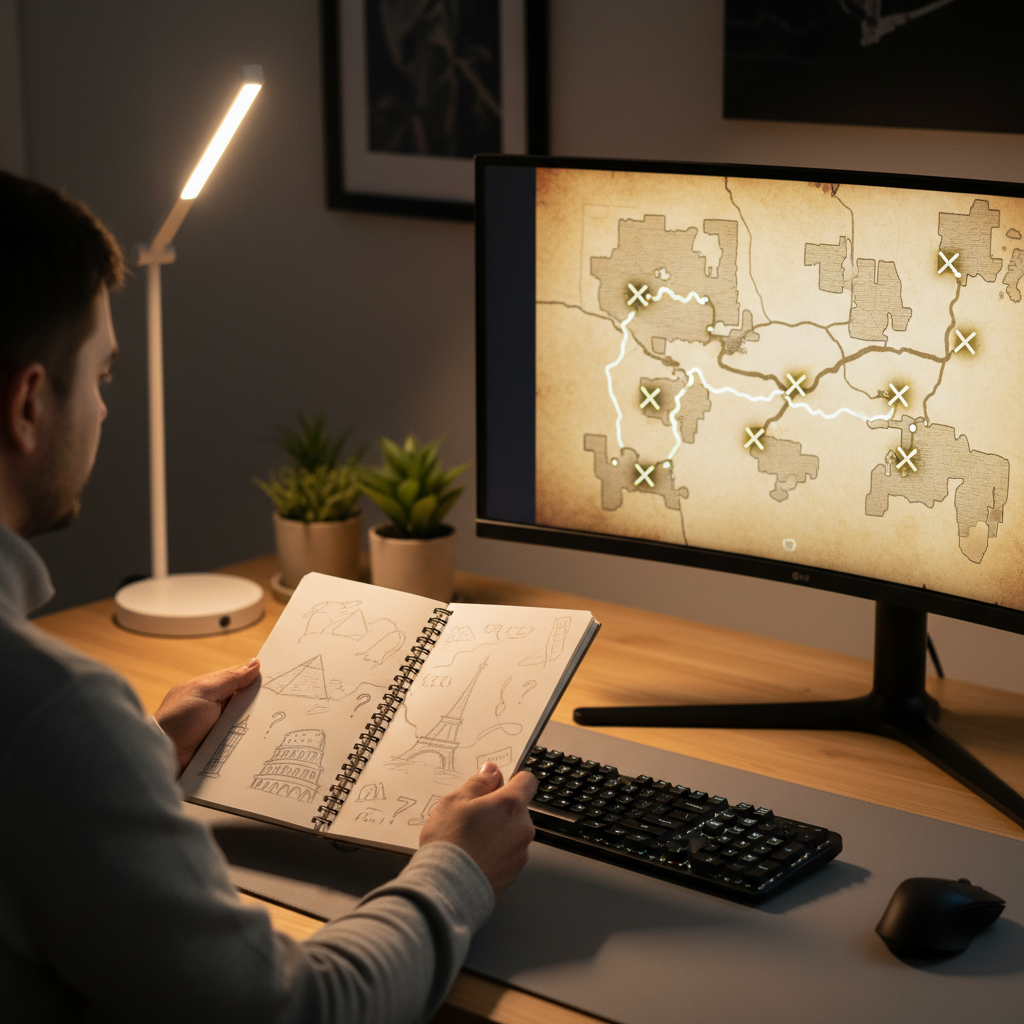
- Use photo mode or a notebook for landmarks if you enjoy “detective energy.”
Play in “hunt blocks,” not endless roaming
- Pick one map chain or one region, finish it, then stop.
- Sell/turn-in treasures between hunts, it keeps the loop satisfying.
- If co-op, assign roles: one person navigates, one scans threats, one manages inventory.
Use guides strategically, not as a default
There’s no medal for suffering. If you’re 80% done and stuck on the final step, a quick hint can preserve the fun. According to ESRB, ratings summaries can help you understand themes and intensity before choosing a game for your household.
My rule: look for one hint, then try again, only pull a full solution if the session is about to die.
Common mistakes that make treasure hunts feel boring
- Treating every collectible as “treasure”: it turns the game into chores. Focus on hunts with clues or multi-step trails.
- Overusing fast travel: convenient, but it can erase the navigation fantasy. Mix in some manual routes.
- Ignoring in-world notes: journals, sketches, and NPC rumors often contain the good stuff.
- Assuming bigger map equals better hunts: many great treasure moments happen in smaller, handcrafted spaces.
If you’re feeling burned out, it’s usually not because you dislike treasure hunting, it’s because the game isn’t respecting your attention.
Conclusion: picking your next treasure hunt
The best games with treasure hunting and maps are the ones that make you pause, look at the terrain, and say, “Wait, I think it’s over there.” That little moment is the whole point.
If you want a safe starting bet, choose based on your preferred hunt style: social piracy with Sea of Thieves, cinematic clue chasing with Uncharted, puzzle tombs with Tomb Raider, open discovery with Tears of the Kingdom, or slow-burn map chains in RDR2.
Action tip: pick one game, then commit to a single treasure chain tonight, don’t try to “complete” the whole map. The genre feels better in focused bites.
FAQ
What are the best games with treasure hunting and maps for beginners?
Uncharted 4 and the modern Tomb Raider games usually work well because the clue flow stays clear, and you can lean on the game’s pacing when you’re new to map-style exploration.
Which treasure hunting games have the most realistic map reading?
Sea of Thieves and Red Dead Redemption 2 often feel closer to real map interpretation because landmarks matter, and you spend time navigating rather than teleporting between objectives.
Are there treasure hunting games that focus more on puzzles than combat?
Outer Wilds is a strong option if you prefer thinking over fighting, though the “treasure” is mostly discovery. Some Tomb Raider challenge tombs also skew puzzle-heavy if you avoid extra combat areas.
Do open-world games ruin the treasure hunt feeling?
Not automatically. Open worlds can support great hunts, but when everything becomes a marker, the hunt turns into errands. Tweaking HUD options and choosing clue-based content helps.
What should I play if I like treasure maps but hate getting lost?
Look for games with structured clue chains and strong journals or logs, then allow yourself to use a hint when you’re stuck. You can still get the “aha” without spending an hour wandering.
Is Sea of Thieves good solo for treasure hunting?
You can play solo and do voyages, but the world risk tends to feel higher alone. Many players enjoy it more with at least one friend so navigation and defense don’t compete for attention.
Are these games okay for kids?
It depends on the title and your comfort with violence, themes, and online interactions. According to ESRB, you can check age ratings and content descriptors before deciding for your household.
Key takeaways
- Map friction matters: fewer arrows usually means better treasure-hunt vibes.
- Pick by hunt style: social, cinematic, puzzle-focused, sandbox, or mystery-driven.
- Play in short loops: one chain per session keeps discovery feeling fresh.
If you’re trying to choose fast, make a shortlist of two games that match your hunt style, watch five minutes of gameplay to confirm the map and clue UI, then commit to one. That small step saves you from buying something that looks like a treasure hunt but plays like a checklist.