
best vr cooking games 2026 is a tricky search because “cooking” in VR can mean anything from chill recipe sims to full-on kitchen chaos with timers, orders, and teammates yelling across the pass.
If you buy the wrong style, you usually find out fast: motion controls feel fiddly, you get overwhelmed by time pressure, or the game looks great on trailers but turns into repetitive chopping. This guide narrows the field with a practical angle—what feels good to play, what fits your headset and play space, and what kind of “cook” you actually want to be in VR.
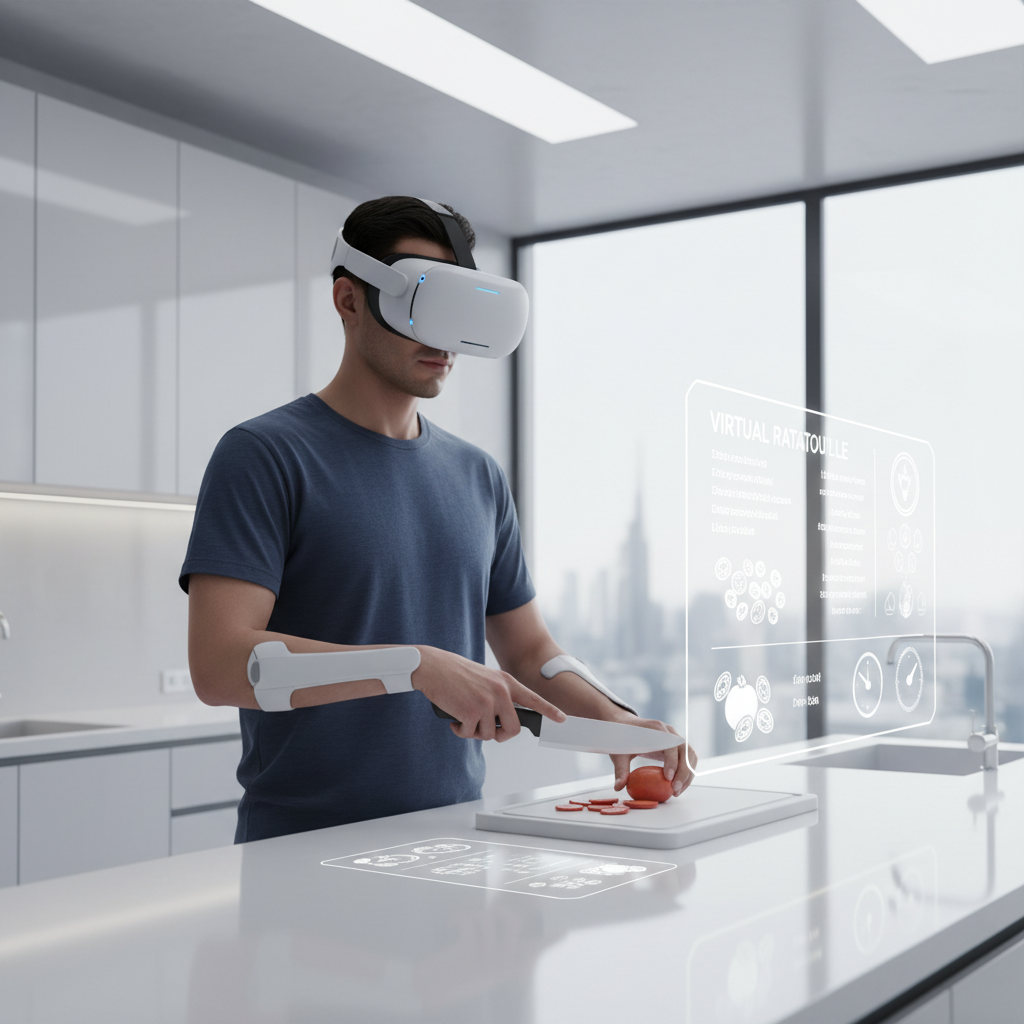
I’ll also call out common gotchas like nausea triggers, tracking quirks, and why some “top lists” ignore comfort settings. And yes, there’s a quick table so you can shortlist in minutes.
Quick picks: best VR cooking games 2026 by play style
Here’s a fast way to choose: decide whether you want co-op chaos, solo realism, or short sessions. The names below are widely known staples in VR cooking; exact feature sets can vary by platform version and updates.
| Game | Best for | Session feel | Comfort notes |
|---|---|---|---|
| Cooking Simulator VR | Hands-on, physics cooking | Experiment + sandbox | Usually comfortable, watch bending/reaching |
| Cook-Out: A Sandwich Tale | Co-op teamwork | Arcade, order rush | Great for standing/room-scale |
| Job Simulator | Beginner-friendly “kitchen vibes” | Comedic, low stress | Very comfortable for most players |
| I Expect You To Die (series) | Puzzle fans who like “food moments” | Seated, mission-based | Seated play helps reduce nausea risk |
| VRChat (cooking worlds) | Social cooking, roleplay | Varies by world | Comfort depends on locomotion settings |
- Key takeaway: if you want “real cooking,” start with a sim; if you want “party energy,” pick a co-op arcade kitchen.
What makes a VR cooking game actually good in 2026
A lot of “best vr cooking games 2026” lists still judge on screenshots. In real play, three things decide whether you keep launching the game after day three.
- Hands feel: grabbing, slicing, pouring, and plating should feel consistent. If you fight the collision system, it stops being fun.
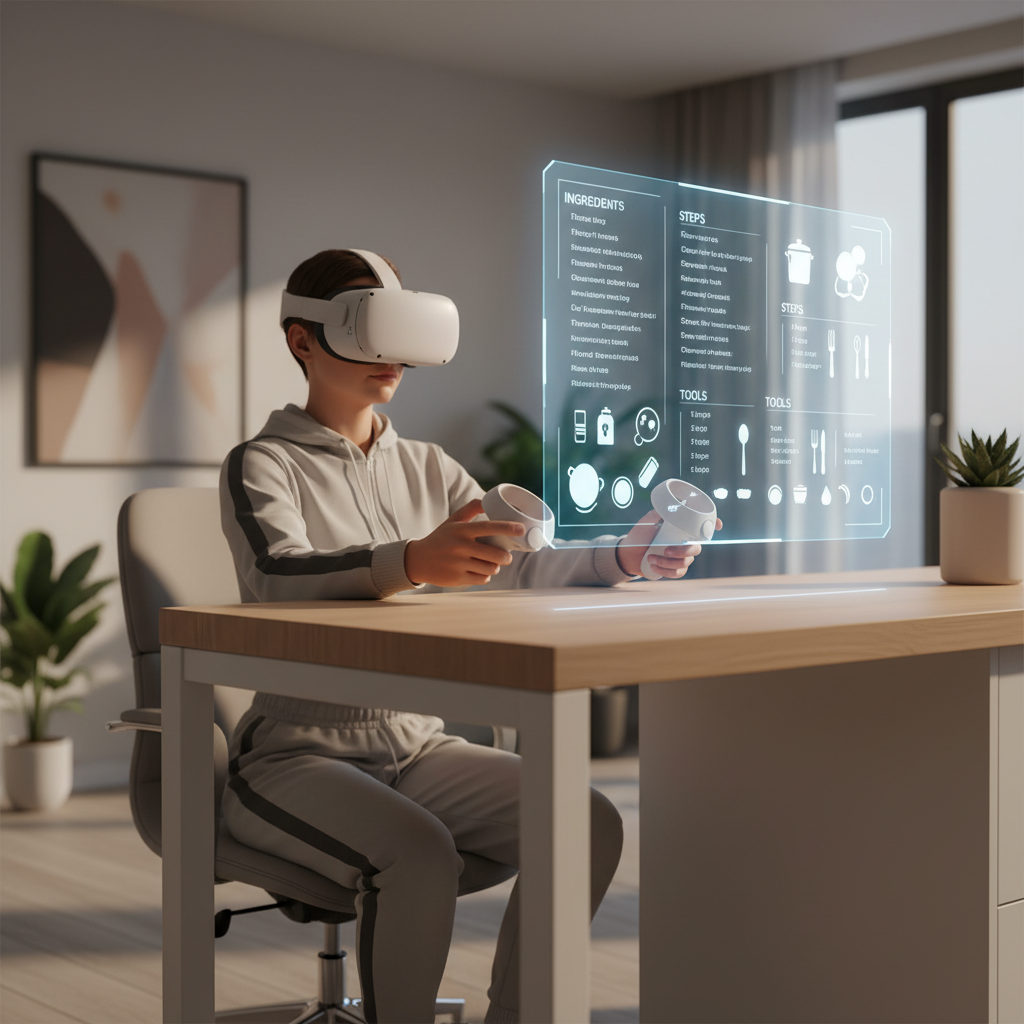
- Readable UI: orders, timers, and ingredient lists must be legible at a glance. Tiny floating text is a dealbreaker in a headset.
- Failure feels fair: chaos is fine, “I lost because tracking jitter dropped my plate” is not.
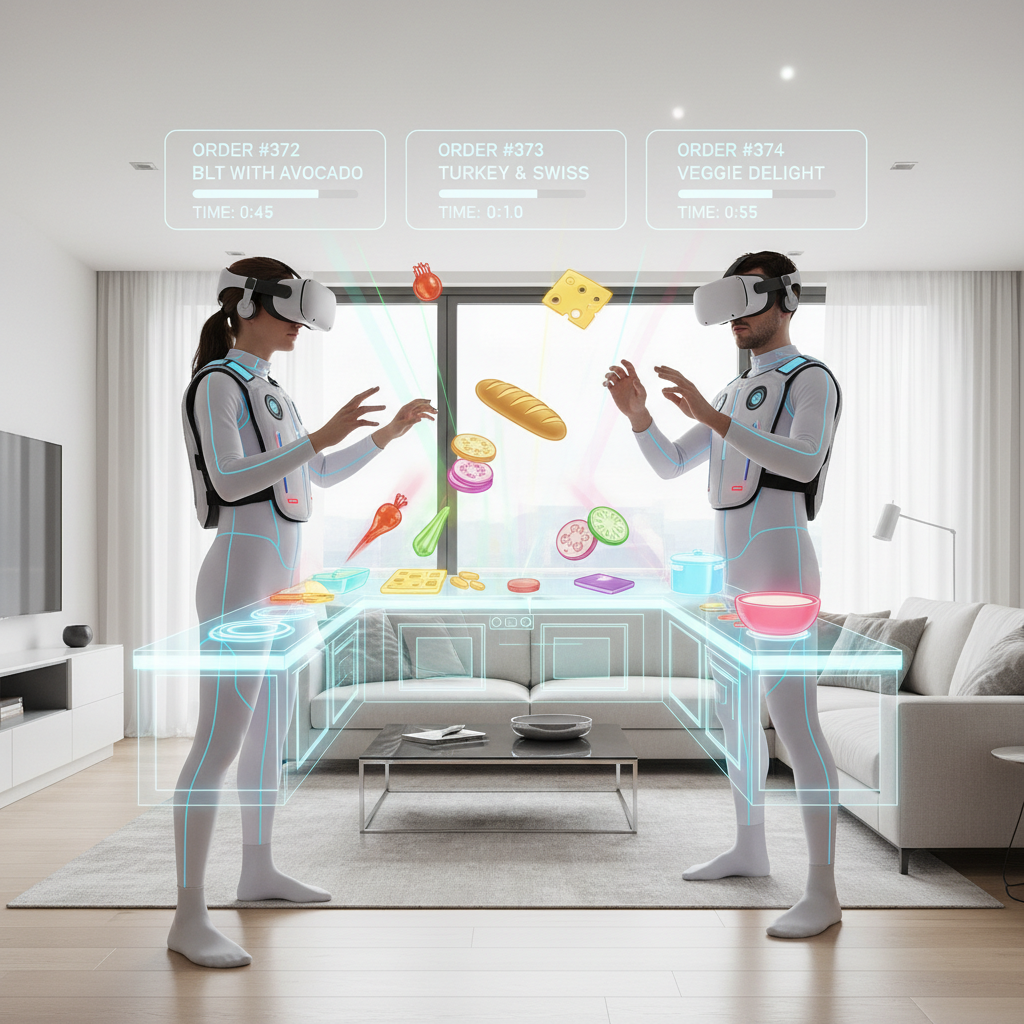
Also, 2026 buyers care more about cross-play and co-op stability than ever. A cooking game lives or dies on smooth multiplayer and predictable matchmaking, when it offers co-op.
Top games worth shortlisting (with honest “who it’s for” notes)
Cooking Simulator VR
If your idea of fun is poking at systems—heat, timing, prep, physics—this tends to be the most “chef-y” option. It’s also the type of game where you’ll laugh at your own mess when something flips off the pan.
- Great for: solo play, experimenting, creators/streaming
- Watch out for: bending over counters, reaching for low shelves can tire shoulders in longer sessions
Cook-Out: A Sandwich Tale
This is the classic “kitchen co-op” pitch done right: assemble, communicate, keep the line moving. Many households use it like a VR party game because it’s easy to understand in 30 seconds.
- Great for: families, couples, friend groups
- Watch out for: if you hate time pressure, the charm can turn into stress
Job Simulator (kitchen tasks)
Not a pure cooking sim, but it remains one of the easiest onboarding ramps in VR. The “kitchen” section is playful, forgiving, and excellent for people who don’t want a tutorial that feels like homework.
- Great for: first-time VR players, short sessions
- Watch out for: if you want realistic cooking, it’s more comedy than craft
VRChat cooking worlds (bonus pick)
This is the wildcard: not one “game,” but community worlds where cooking is a social activity. When it works, it’s surprisingly cozy; when it doesn’t, it’s a lobby experience with lots of noise.
- Great for: social players, roleplay, trying new environments
- Watch out for: comfort varies wildly based on locomotion settings and the world creator’s design
How to choose based on your headset, space, and comfort
Before you buy, match the game to your setup. This step saves more money than any “Top 10” list.
- Small play area: prefer seated or standing-in-place kitchens, avoid heavy room-scale reaching.
- Tracking quality: if your controllers lose tracking near your waist, games with lots of low-counter interactions can feel annoying.
- Motion sensitivity: choose teleport or stationary movement when available. According to CDC, VR users can experience symptoms like dizziness and nausea; if you’re prone to motion sickness, keep sessions short and adjust comfort options.
If you share the headset, prioritize games with quick restarts and clear roles. In group play, friction usually comes from menus and calibration, not from gameplay difficulty.
Self-check: which type of VR “cook” are you?
Answer these fast, and you’ll know which “best vr cooking games 2026” category is likely to land for you.
- You want to relax after work, not “perform” under timers → sandbox or comedic cooking
- You like shouting callouts and optimizing workflows → co-op order rush
- You replay levels to shave seconds and perfect routines → arcade challenges
- You care about recipes, technique, and process → simulation
- You mostly want to hang out with friends → social worlds
Practical setup tips to make cooking games feel better
Small tweaks make a bigger difference here than in many other VR genres, because you use your hands constantly.
- Set your floor height correctly: wrong floor height makes every counter feel “off,” and you’ll miss grabs.
- Clear a “no-hit zone”: one arm’s length around you, especially if you tend to chop with enthusiasm.
- Use a fan: airflow can reduce discomfort for some players and helps you keep your orientation.
- Short sessions first: 10–20 minutes, then ramp up. If you feel sweaty, dizzy, or headache-y, stop and take a break.
If you’re playing co-op, agree on a simple system early: one person plates, one person preps, someone calls orders. It sounds obvious, but it’s the difference between “fun chaos” and “why are we arguing over lettuce.”
Mistakes people make when buying VR cooking games
- Buying for hype, not play style: the most streamed kitchen chaos game might be your personal nightmare.
- Ignoring comfort settings: smooth locomotion plus lots of head-down counter work can be a rough combo.
- Assuming all versions match: features and performance can differ by store and headset, so check the platform listing and recent patch notes.
- Underestimating fatigue: standing and reaching for 45 minutes is “light workout” territory for many people.
Conclusion: a smart way to pick your next kitchen
The best vr cooking games 2026 choice usually comes down to one question: do you want cozy cooking or kitchen adrenaline? If you choose that first, the shortlist gets surprisingly clear.
Action steps that work: pick one co-op option for group nights, and one solo-friendly option for quick sessions, then spend five minutes in settings to tune height, comfort, and controls. That “boring” setup step is where the magic starts feeling natural.
FAQ
What are the best VR cooking games 2026 for co-op?
For most people, a co-op-focused arcade kitchen like Cook-Out is the easiest win because roles are clear and sessions stay punchy. If your group prefers social hangouts, VRChat cooking worlds can work, but quality varies by world.
Which VR cooking game feels most realistic?
Cooking Simulator VR is usually the closest to hands-on process and physics-style interactions. “Realistic” still depends on how forgiving you want the game to be, since true-to-life prep can feel slow in VR.
Are VR cooking games good for kids?
Some are family-friendly, especially comedic task-based games, but it depends on the title’s rating and comfort demands. For younger players, shorter sessions and simpler controls tend to go better, and a guardian should supervise play space safety.
Do VR cooking games help you learn real cooking?
They can help with sequencing and kitchen workflow thinking, but they’re not a replacement for real technique, heat cues, and safety habits. If you want cooking education, consider pairing VR play with beginner recipes in real life.
What if VR cooking makes me nauseous?
Try seated play, teleport movement, and shorter sessions, and avoid games that force smooth walking while you look down at counters. If symptoms persist or feel intense, it’s sensible to stop and, if needed, consult a healthcare professional.
Is there a “free” way to try VR cooking?
Social platforms sometimes have free community-made cooking experiences. The tradeoff is inconsistency—some worlds are great, others feel unfinished—so it’s more of a sampling method than a guaranteed hit.
What accessories actually help with VR cooking games?
A comfortable head strap, controller grips, and a small floor mat to keep your feet centered can help more than most “pro” gear. The goal is steady tracking and less fatigue, not more gadgets.
Key points to remember before you buy
- Pick the vibe first: sim, co-op rush, comedy, or social.
- Match to your space: room-scale kitchens are fun until you hit a lamp.
- Prioritize comfort: settings and session length matter as much as graphics.
- Check your platform listing: features can differ by headset/store version.
If you’re trying to build a small “VR party rotation” and want a short shortlist based on your headset and how many people you usually play with, pick two or three candidates from the table above, then compare comfort options and co-op details on the store page before checkout.