
top tower defense games with coop multiplayer are the fastest fix for that familiar problem: you love the planning part of tower defense, but solo matches start feeling like homework, and random matchmaking can be chaos.
The good news is co-op TD has matured a lot, some games are built around teamwork and roles, others let you drop in casually with friends, and a few are basically “strategy night” in game form. The hard part is picking the right one for your group, because “co-op” can mean anything from true shared control to “we’re just in the same lobby.”

This guide focuses on games where co-op actually matters: shared resources, complementary builds, real coordination, and enough content to keep a squad coming back. You’ll also get a quick self-check, a comparison table, and practical tips to avoid the classic “we lost because nobody upgraded slow.”
What “Co-op” Means in Tower Defense (and Why It Matters)
In tower defense, “co-op multiplayer” usually falls into a few buckets, and the bucket determines whether your group has fun or argues about lane coverage.
- True shared co-op: everyone builds and upgrades in a shared space, often with shared resources. Great for coordinated groups, stressful for mixed skill levels.
- Split lanes / shared objective: each player owns a lane or area, but the team wins or loses together. This is the most “fair” for friend groups.
- Support co-op: one player focuses on buffs, crowd control, or economy, while others handle damage. Not every TD supports this well, but when it does, it feels amazing.
- Drop-in co-op: you can hop in without long planning sessions. Perfect for casual nights.
According to ESA (Entertainment Software Association), social and multiplayer play remains a major driver of how people spend time in games, which is a big reason co-op modes tend to get more ongoing support than “one-and-done” solo content.
Quick Comparison Table: Co-op Tower Defense Picks
If you want the shortlist fast, this table frames the most common decision points: platform, co-op style, and what it feels like with friends.
| Game | Platforms | Co-op Style | Best For |
|---|---|---|---|
| Bloons TD 6 | PC, Mobile, Consoles | Shared map co-op | Easy-to-learn teamwork with depth |
| Kingdom Two Crowns | PC, Consoles, Mobile | 2-player side-scrolling defense | Chill co-op with a long campaign |
| Dungeon Defenders (varies by entry) | PC, Consoles | Action + towers co-op | Players who want to fight and build |
| Legion TD 2 | PC | Team lanes, competitive co-op | Groups who enjoy ranked coordination |
| Orcs Must Die! (series) | PC, Consoles (entry-dependent) | Trap defense co-op | Chaotic “laugh while we fail” nights |
| Element TD 2 | PC | Co-op builds with element mixing | Synergy lovers and theorycrafters |
The Top Tower Defense Games With Co-op Multiplayer (What Each Does Best)
Instead of pretending there’s one “best” option, here’s how the standouts differ in real play, the part you only notice after wave 30.
Bloons TD 6
Bloons TD 6 is the most reliable recommendation for top tower defense games with coop multiplayer because it supports casual co-op while still rewarding coordination. It’s bright, readable, and the meta stays interesting thanks to frequent updates and lots of maps.
- Co-op feel: shared map decisions, timing abilities together, planning upgrades.
- Why it works: mistakes are recoverable, so new players learn without ruining the night.
- Watch-outs: without light coordination, teams can overbuild one lane and ignore key counters.
Kingdom Two Crowns
This is more “defend the kingdom” than classic lane TD, but it scratches the same itch: resource choices now, survival later. Co-op is two-player and intentionally simple, which makes it great for partners or a close friend.
- Co-op feel: one player explores, one invests in walls, archers, and upgrades.
- Why it works: low UI stress, strong atmosphere, slower pace.
- Watch-outs: if you want tight wave-by-wave tower optimization, it can feel too loose.
Dungeon Defenders (series)
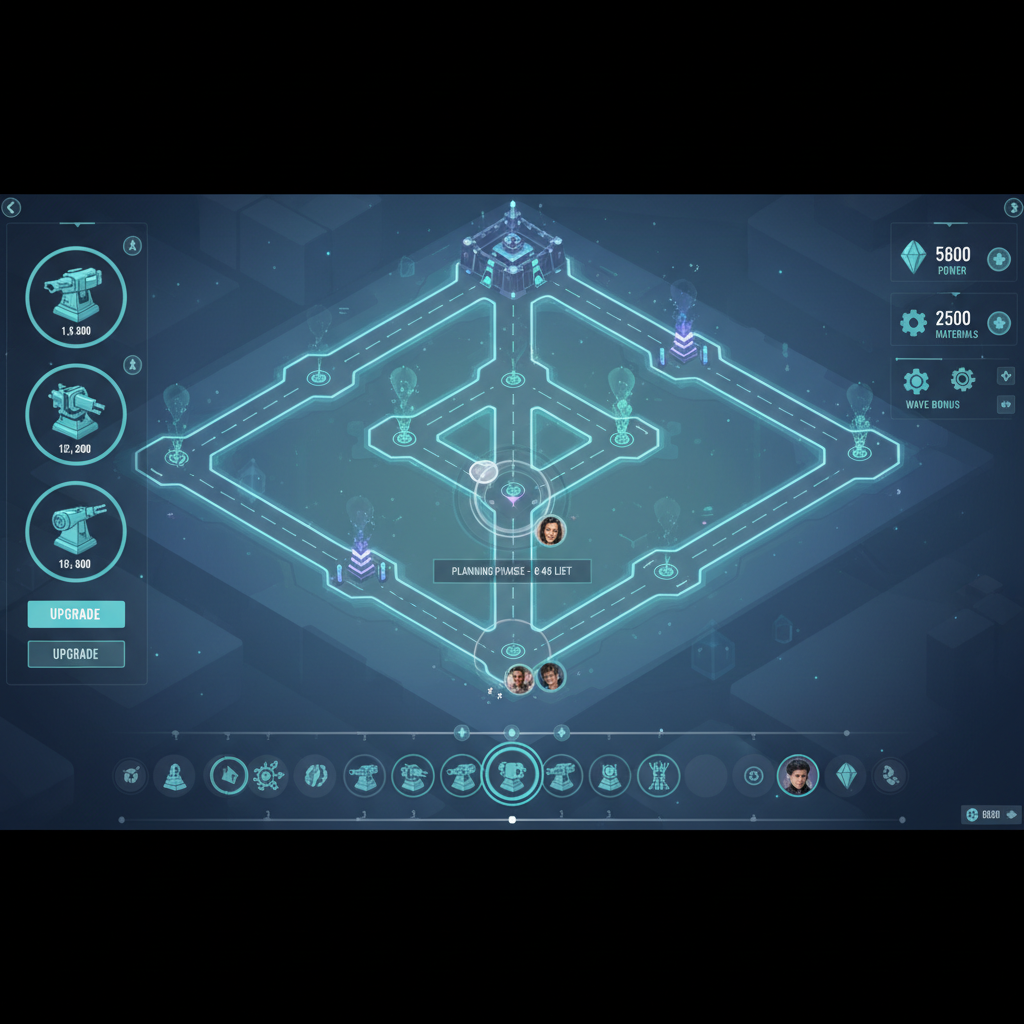
If your group likes mixing action combat with tower placement, Dungeon Defenders is usually the first stop. You’ll build, upgrade, and also actively fight, so co-op roles become natural: builder, DPS, crowd control, boss handler.
- Co-op feel: “you build mid, I’ll hold air units” with constant on-the-fly adjustments.
- Why it works: everyone stays busy, even between build phases.
- Watch-outs: gear progression can be a sticking point, especially if your group has uneven time to grind.
Legion TD 2
Legion TD 2 leans competitive and rewards coordination. It’s not just “place towers,” it’s reading the lobby, building economy, and sending pressure at the right moments. In co-op, your success often depends on whether you can talk about mistakes without spiraling.
- Co-op feel: shared game plan, coordinated timings, covering each other’s weaknesses.
- Why it works: skill expression stays high after hundreds of games.
- Watch-outs: if your group hates losing, set expectations before you queue.
Orcs Must Die! (series)
Orcs Must Die turns “tower defense” into trap comedy. You’ll still plan kill zones and funnels, but moment-to-moment gameplay is more active, which keeps co-op energy high even when the plan falls apart.
- Co-op feel: one player builds choke traps, the other kites enemies into them.
- Why it works: fast resets, high replay value, satisfying physics.
- Watch-outs: less pure strategy, more reflexes, depending on the entry and difficulty.
Element TD 2
This one is for players who enjoy systems. Choosing elements, mixing them into towers, and anticipating what the next waves demand becomes a shared puzzle. When co-op clicks, it feels like solving a build together.
- Co-op feel: “I’ll go water/earth for slows and tanks, you take fire/air for burst.”
- Why it works: synergy planning creates real teamwork, not just parallel play.
- Watch-outs: it can overwhelm newcomers who just want a chill night.
Self-Check: Which Co-op TD Fits Your Group?
Before buying anything, answer these quickly. You’ll avoid the common mismatch where one person wants cozy co-op and the other wants ranked optimization.
- How many players, really? If you’re usually 2, Kingdom Two Crowns feels purpose-built. If you’re 3–4, Bloons TD 6 tends to fit better.
- Do you like action? If you want to shoot and build, look at Dungeon Defenders or Orcs Must Die.
- Is your group okay with failure? Competitive games like Legion TD 2 can be brutal when communication is shaky.
- Do you enjoy “build talk”? If yes, Element TD 2 shines because planning is the fun.
- How important is cross-platform? Many co-op nights die on the “who can play where” question.
Practical Co-op Tips That Win More Waves (Without Micromanaging)
You don’t need a spreadsheet, but you do need a few habits. Most co-op losses come from coordination gaps, not “bad towers.”
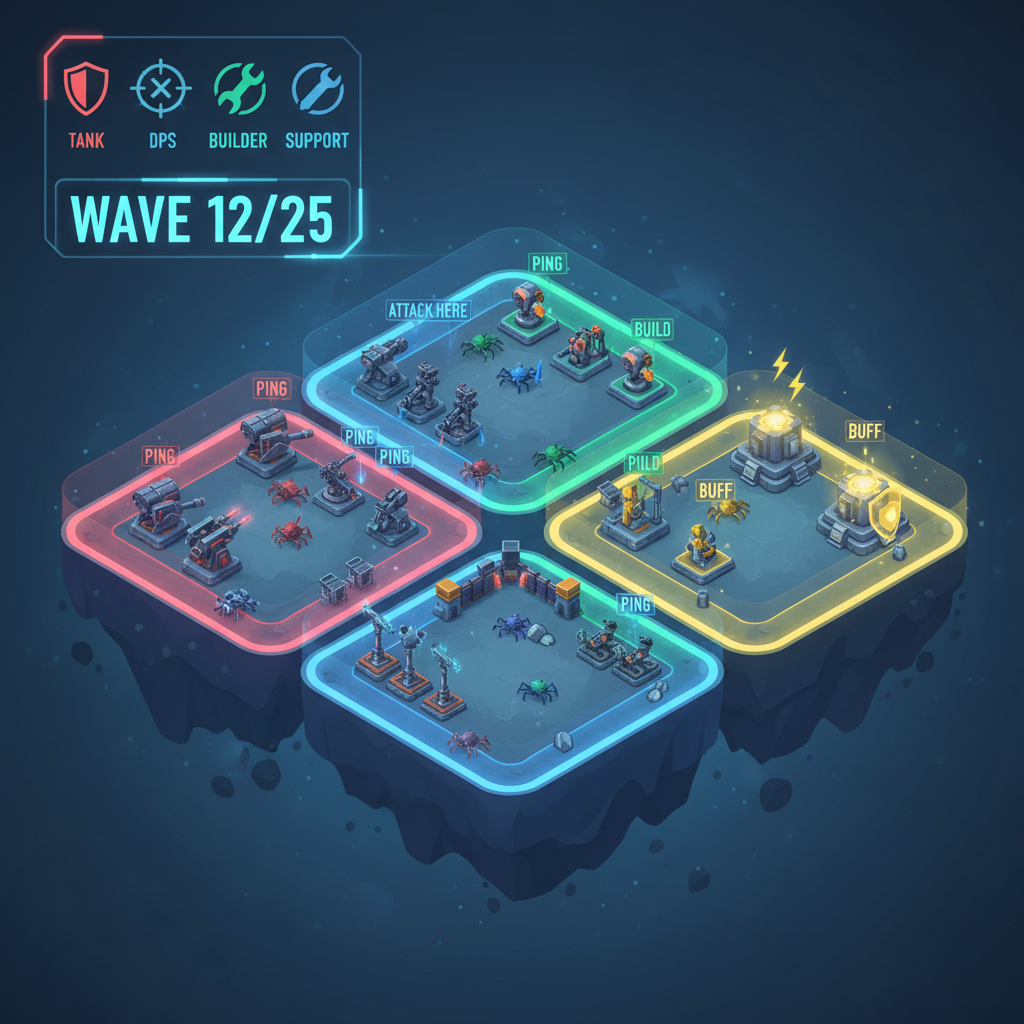
- Assign responsibility early: lanes, air defense, slows, economy, boss damage. Keep it simple.
- Call upgrades, not just placements: many TD games are won on timing, “upgrade now” matters more than “build here.”
- Agree on one shared rule: for example, “no spending the emergency fund below X,” or “one person handles support towers.”
- Use short callouts: “leaks left,” “need slow mid,” “saving for hero,” so comms stay light.
- After a loss, change one thing: swapping 10 things creates noise and blame, one change creates learning.
Common Mistakes People Make When Choosing Co-op Tower Defense
These are the traps that make people think they hate co-op TD, when they really just picked the wrong style.
- Assuming “online co-op” equals good co-op: some modes are basically solo builds side-by-side with little interaction.
- Buying for the loudest friend: the most competitive player often pushes a game the rest won’t stick with.
- Ignoring progression friction: grindy gear systems can split groups by time investment, even if everyone likes the gameplay.
- No plan for difficulty: if you jump straight into harder modes, the early losses feel personal.
- Over-optimizing early: in many cases, a stable comp beats a “perfect” comp executed inconsistently.
Conclusion: Picking Your Next Co-op TD Night
If you want a safe pick, start with Bloons TD 6 because it hits the sweet spot for most friend groups and keeps the learning curve friendly. If your group prefers slower, moodier co-op, Kingdom Two Crowns can surprise you. If you want active combat plus building, Dungeon Defenders and Orcs Must Die stay crowd-pleasers, while Legion TD 2 and Element TD 2 reward teams who like planning and improvement.
Two simple action steps usually work: choose one game that matches your group’s tolerance for complexity, then agree on roles before wave one. That alone prevents a lot of “we had towers everywhere but still lost” nights.
FAQ
What are the top tower defense games with coop multiplayer for casual players?
For most casual groups, Bloons TD 6 tends to land well because mistakes don’t instantly end a run, and it’s easy to understand what went wrong. Kingdom Two Crowns also works if your co-op vibe is more relaxed and you prefer longer sessions.
Which co-op tower defense game is best for 4 players?
Bloons TD 6 is a common 4-player favorite thanks to clear roles and lots of maps. If your group wants more action movement, a Dungeon Defenders entry can fit better, but progression pacing varies by game.
Are there co-op tower defense games that don’t require voice chat?
Yes, especially games with clear lane ownership or simple upgrade paths. Bloons TD 6 often works fine with pings or quick messages, while competitive options like Legion TD 2 usually feel better with voice, at least for coordination moments.
What should we do if one friend always “overbuilds” and drains resources?
Set a small rule before the match, like a minimum shared bank amount or a “one lane lead” who approves big spends. It sounds formal, but it removes friction and keeps the session fun.
Is action tower defense better for co-op than traditional TD?
It depends on your group. Action TD like Orcs Must Die can feel more social because everyone stays active, but if your group loves planning and optimization, traditional lane defense may be more satisfying.
How do we know if a TD game’s co-op is real teamwork or just parallel play?
Look for shared resources, shared objectives, and mechanics that reward complementary builds, like slows plus burst or economy plus damage. If everyone can ignore each other and still win, it’s usually lighter co-op.
What platforms are best for co-op tower defense nights?
PC often has the widest selection, while mobile can be surprisingly good for quick co-op sessions depending on the game. Consoles can be great when a title supports couch co-op, but availability is more title-specific.
If you’re trying to lock in a dependable weekly pick, it helps to write down your group’s must-haves, player count, and tolerance for grind, then choose from the shortlist above instead of browsing every “co-op” tag and hoping it works out.