
best vr stealth games 2026 is a tricky search because “stealth” in VR can mean totally different things, slow-burn infiltration, social sneaking, horror-leaning hide-and-seek, or physics-driven improvisation where one mistake turns into chaos.
If you just want a quick list, sure, you can grab any roundup, but most lists skip the part that actually matters in VR: comfort, tracking demands, how forgiving the AI feels, and whether the game supports seated play when you’re tired.
This guide focuses on what people in the US usually care about in 2026: headset comfort over long sessions, smooth locomotion options, and stealth systems that feel fair when you mess up. You’ll get a short, opinionated shortlist, a comparison table, and a simple way to match a game to your stealth “mood.”
How we’re defining “stealth” in VR (so the list stays honest)
In flat-screen games, stealth often means line-of-sight cones and crouch-walking. In VR, the genre splits into a few practical buckets, and your preference changes everything.
- Systemic stealth: you have multiple tools, routes, and “plan B” options when things go sideways.
- Social stealth: disguise, blending, acting normal, and reading NPC behavior.
- Horror stealth: hiding, listening, timing, and surviving more than “winning.”
- Arcade stealth: compact missions, fast restarts, high replay value.
Also, VR stealth lives or dies on comfort settings. According to Meta (Quest platform guidance), comfort features like vignetting, snap turning, and adjustable movement can reduce discomfort for many players, though individual tolerance varies.
Best VR stealth games 2026: quick picks (with who they fit)
Below are standout stealth-first or stealth-friendly VR games that tend to hold up well in 2026. Availability can change by platform and region, so treat this as a curated shortlist, not a storefront guarantee.
Stealth Essentials (great “core stealth” feel)
- Budget Cuts (1 & 2) – Classic VR stealth with teleport-focused movement, great for players who want tactics without heavy motion.
- Espire 1: VR Operative – Infiltration missions, gadgets, and classic stealth loops; better if you enjoy “VR Metal Gear” vibes.
- Phantom: Covert Ops – Stealth from a kayak, surprisingly effective at reducing motion issues for many people, while still feeling tense.
Horror-leaning stealth (tension first)
- Alien: Rogue Incursion – Stealth under pressure, sound and timing matter, mistakes feel costly.
- Five Nights at Freddy’s: Help Wanted 2 – Not traditional stealth, but it nails “don’t get caught” tension in VR.
Immersive sims and stealth-adjacent (you can play stealthy)
- Skyrim VR (with stealth build) – Old but flexible; stealth archery and sneaking can still be a VR comfort zone.
- Hitman: World of Assassination (VR modes, where available) – Social stealth fantasy, but performance and interaction fidelity vary by hardware and version.
Indie and “surprisingly stealthy” picks
- Into the Radius – Survival-heavy, but stealth is often the smarter option than firefights.
- The Walking Dead: Saints & Sinners – You can brute force, but sneaking and quiet kills usually keep you alive longer.
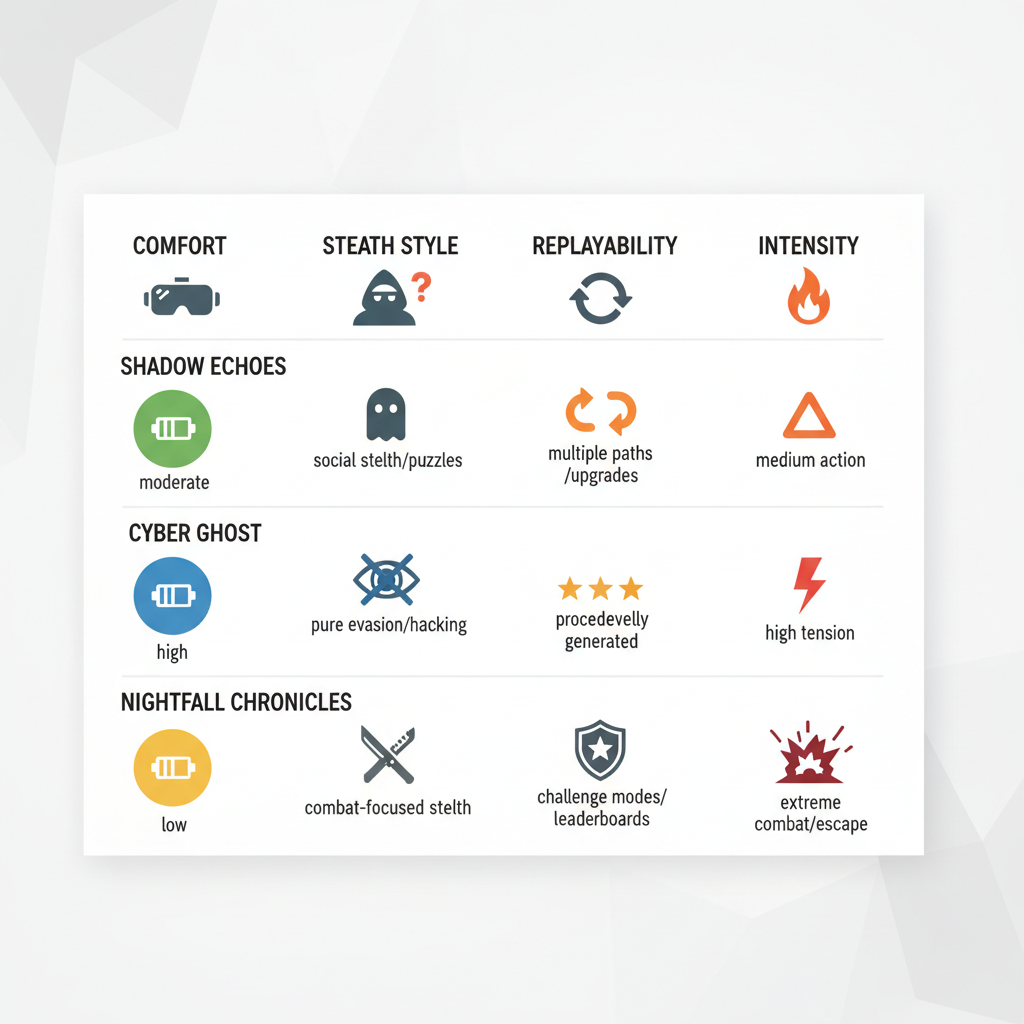
Comparison table: choosing the right stealth vibe fast
This table doesn’t try to rank “best” in a vacuum. It helps you narrow down what fits your body, your headset time, and your tolerance for stress.
| Game | Stealth style | Intensity | Comfort notes | Why it’s here |
|---|---|---|---|---|
| Budget Cuts | Systemic / puzzle stealth | Medium | Teleport-friendly, lower motion load | Clean stealth loop, readable enemies |
| Espire 1 | Tactical infiltration | Medium | Comfort varies with smooth locomotion | Gadgets + mission structure |
| Phantom: Covert Ops | Stealth ops (vehicle-based) | High | Kayak framing may help some players | Tense stealth without full free-roam |
| Alien: Rogue Incursion | Horror stealth | Very high | Take breaks, stress can spike | Sound-driven, high-stakes stealth |
| Into the Radius | Survival stealth | High | Session length matters, pace yourself | Stealth as a practical survival tool |
| Hitman (VR modes) | Social stealth | Medium | Version/hardware differences matter | Disguises, routes, “act normal” play |
A quick self-check: which stealth VR game will you actually finish?
People buy stealth games for the fantasy, then bounce because the experience feels rough in-headset. Use this quick check before you commit.
- You get motion sick easily → prioritize teleport or vehicle-based movement, start with Budget Cuts or Phantom: Covert Ops.
- You want “quiet, clever, satisfying” → look for systemic stealth and predictable AI patterns.
- You want high tension → horror stealth hits harder in VR, but it’s also the fastest path to fatigue.
- You hate restarting missions → choose games with flexible recovery tools, not pure fail-state stealth.
- You only play in 20–30 minute blocks → arcade-leaning or mission-based stealth fits better than open-ended survival.
If you’re building a 2026 “rotation,” it’s normal to keep one comfort stealth game and one high-stakes stealth game, your mood changes more than you think.
Practical setup tips that make stealth feel better in VR
A stealth game can be excellent and still feel awful if your settings fight your body. Small tweaks usually do more than buying another title.
Comfort and movement
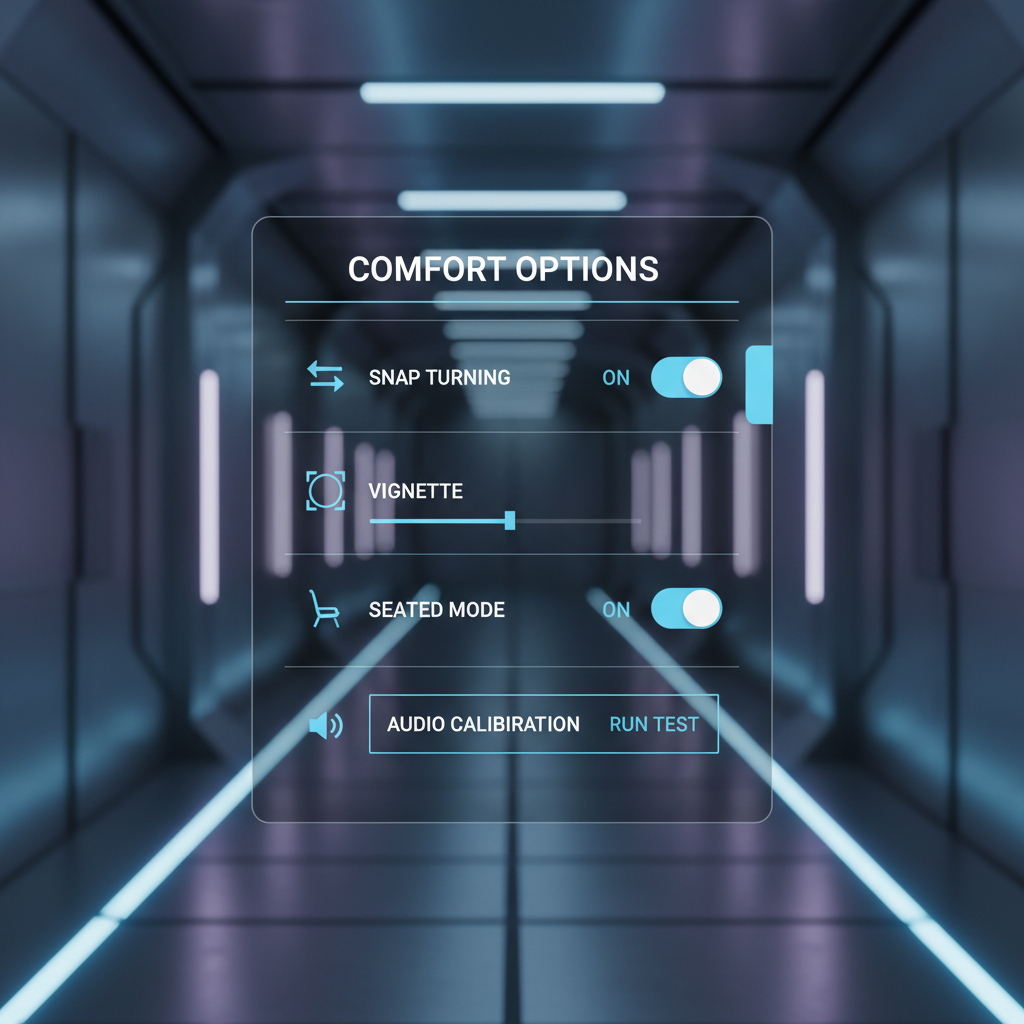
- Start with snap turn if smooth turning triggers nausea for you, then adjust gradually.
- Use vignetting if offered, especially in faster games; it can reduce discomfort for many players.
- Try seated or “standing with a stool” for long stealth sessions, it reduces fatigue during slow play.
Stealth-specific tuning
- Calibrate your crouch: real crouching feels immersive, but a toggle-crouch saves knees on long missions.
- Raise brightness slightly if you’re straining in dark scenes, stealth should be tense, not unreadable.
- Dial audio first: many stealth systems punish noise; good headphones often matter more than graphics.
Common mistakes when picking the best VR stealth games in 2026
A lot of “this game is overrated” takes are really “this game didn’t match my stealth personality” problems. A few patterns show up again and again.
- Buying on hype, not comfort: free locomotion looks great in clips, but your stomach may disagree.
- Assuming VR ports behave like native VR: interaction, performance, and controls can vary widely by version.
- Over-indexing on realism: ultra-punishing stealth can feel cool once, then turns into slow frustration.
- Ignoring replay structure: if you want nightly play, mission-based games usually beat long survival runs.
And yes, stealth AI in VR can feel “unfair” when a tiny tracking hiccup reveals you. When that happens often, it’s not you, it’s the friction between design and hardware.
When to slow down or get help (comfort and safety)
Stealth VR often involves long periods of tension, tight turns, and sudden surprises. If you notice nausea, headaches, eye strain, or lingering dizziness, it’s smart to stop and take a break. According to CDC, dizziness and balance issues can increase fall risk; in VR that risk can go up if you keep pushing while disoriented.
If symptoms persist, or you have a medical condition that affects balance or vision, consider asking a healthcare professional for advice. This is especially relevant if you’re trying higher-intensity horror stealth where stress response runs hotter.
Key takeaways + a simple recommendation path
- If you want classic stealth, start with Budget Cuts or Espire 1, they teach VR stealth habits without overwhelming you.
- If you want “high stakes”, Phantom: Covert Ops or Alien: Rogue Incursion delivers tension, just pace your sessions.
- If you want a long-term obsession, Into the Radius rewards careful play and makes stealth feel practical.
My honest advice: pick one game that fits your comfort profile today, then add a second that stretches you a bit. That’s how most people end up actually finishing more than one stealth campaign.
If you’re deciding what to play this weekend, choose based on your tolerance for motion and stress, not on what looks coolest in a trailer, your body will decide the experience either way.